Machine vision enters VISION 2026 at a significant point in its development. While some sectors continue to face economic uncertainty – and this year won’t go down as one of the most predictable for anyone – demand for the Stuttgart event remains strong; while the scale and international support for this year’s show signals that the technology remains as strategically important as ever.
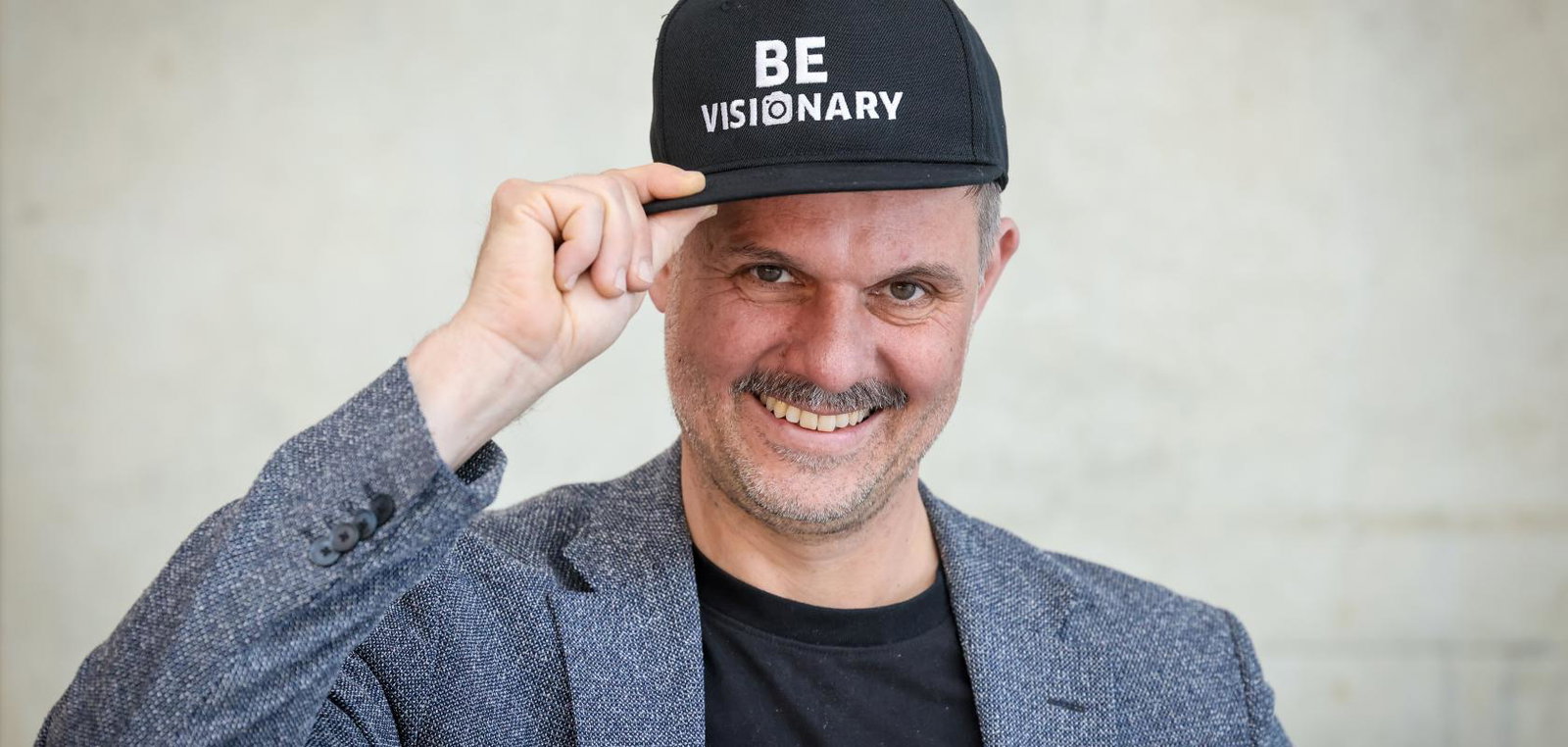
According to Florian Niethammer, Head of Exhibitions and Events at Messe Stuttgart and Project Manager for VISION 2026, “demand for VISION 2026 remains exceptionally strong”, with established industry leaders being joined by “innovative newcomers”. The figures underline that claim. Almost 500 companies are expected to exhibit at VISION 2026, with around two thirds coming from outside Germany and almost one third exhibiting at the event for the first time.
That represents further growth from an already strong 2024 edition. VISION 2024 attracted 483 exhibitors from 38 countries and more than 8,000 visitors, 49% of whom came from outside Germany. Visitor numbers increased by 23% compared with 2022, while exhibitor numbers rose from 379 in 2022 to 483 in 2024.
For Niethammer, that resilience reflects the position machine vision increasingly occupies within industrial manufacturing. “This underlines the strategic importance of machine vision as a key enabling technology for industrial competitiveness,” he says. “While companies may be taking a more cautious approach to investments in certain areas, they continue to prioritise solutions that improve productivity, quality and automation.”
The implication is significant: machine vision may traditionally have been viewed as one component of an automated production system, but increasingly it is becoming part of the intelligence that allows those systems to operate. “Machine vision has always been an enabling technology,” says Niethammer, “but its role within automated systems is becoming increasingly central.”
If there is one technology likely to dominate debate at VISION 2026, it is AI. But Niethammer is keen to distinguish the current wave of industrial AI from the earlier period in which machine vision suppliers could simply attach the AI label to emerging products. “At VISION 2026, visitors will see that AI has moved well beyond the experimental stage,” he says. “AI is increasingly being integrated into complete vision solutions and deployed in real production environments.”
That shift is visible in the types of applications being demonstrated. AI-based systems are increasingly being used for inspection tasks that have historically been difficult to implement with conventional rule-based machine vision, particularly when products vary significantly or defects are difficult to define in advance. Visitors will encounter applications ranging from defect detection and classification to AI-supported image analysis running directly on edge devices.
The emphasis, however, will be on industrial value rather than AI for its own sake. “The focus at VISION will be less on AI as a buzzword and more on measurable industrial value, practical implementation and real-world success stories,” Niethammer says. That focus is particularly relevant as machine vision moves into environments where data processing, latency, connectivity and system architecture are becoming as important as the camera or sensor itself.
The increasing use of AI also creates another challenge in data. Training industrial vision models can require large quantities of accurately annotated imagery, but generating that data can be expensive and time-consuming. VISION 2026 will therefore give synthetic data a much more prominent role through its new Synthetic Data Symposium. “As many industrial applications require large volumes of annotated training data, synthetic data is becoming a key enabler for scalable and efficient AI deployment,” says Niethammer.
The symposium will bring together industry and research experts to discuss approaches to generating and using synthetic data, as well as the challenges involved in applying it to industrial vision. The event will take place on the mornings of 7 and 8 October, alongside the exhibition, with places limited.
Broad technologies sweep VISION Award shortlist
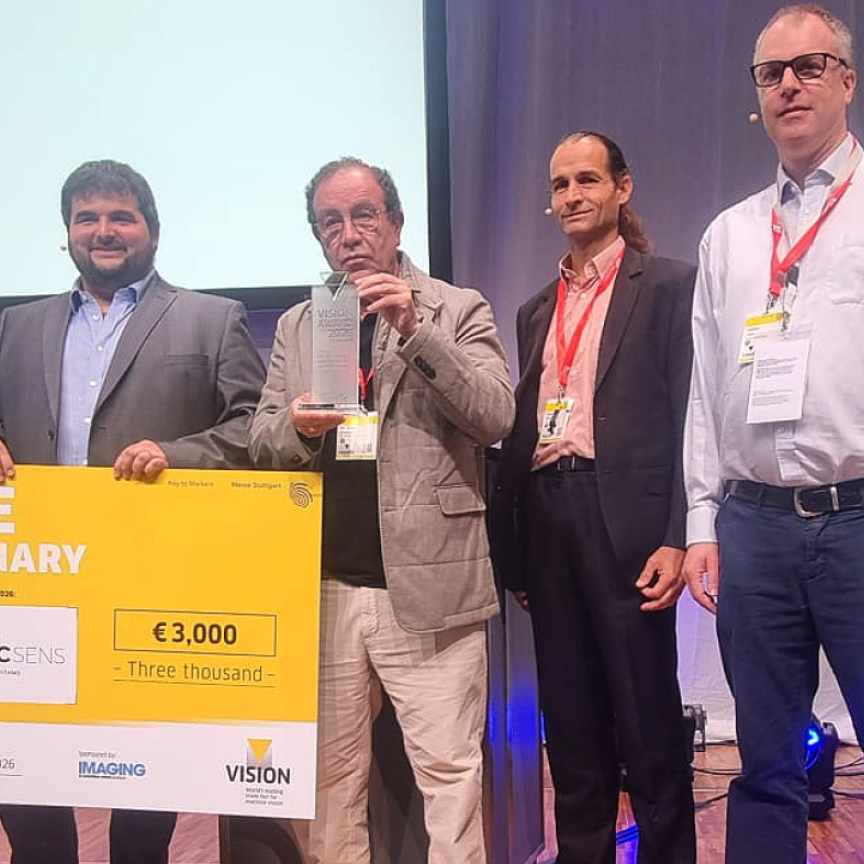
AI may be the most visible theme, but the technology landscape at VISION 2026 will be considerably broader. Niethammer points to developments in SPAD sensor technology, simulation tools, synthetic data generation, LiDAR and 3D light-field imaging among the areas represented by this year's VISION Award shortlist, again sponsored by Imaging and Machine Vision Europe. Hyperspectral imaging is also gaining momentum, while industrial PCs, embedded computing and edge AI platforms are growing in prominence.
This reflects a broader change in the architecture of machine vision systems. Increasingly, sensing, computation and software are being developed together rather than as discrete elements. “What makes VISION unique is the opportunity to experience not only individual technology innovations, but also how these advances are increasingly converging,” says Niethammer. “Visitors can see how breakthroughs in sensing, computing, AI and software are coming together to enable the next generation of machine vision solutions and intelligent automation.”
This convergence is also reflected in the event’s increasingly application-oriented character. VISION has historically provided a comprehensive showcase of cameras, optics, lighting, sensors and software. The event now places those technologies into a much wider industrial context. Perhaps the most important change Niethammer identifies is the industry’s move away from selling individual components towards addressing complete application problems.
“I hope visitors leave with a broader understanding of how machine vision is evolving,” he says. “While VISION has traditionally been known as the world’s leading trade fair for machine vision components and technologies, the industry is increasingly shifting from individual products toward integrated solutions.”
The distinction matters because the end user is increasingly buying an outcome rather than simply a camera, lens or lighting system. Niethammer says companies are increasingly focusing on “specific applications and end-user challenges rather than individual technologies”. Even traditional component suppliers are adopting a more solution-oriented approach, targeting vertical markets such as logistics, semiconductors, medical technology, robotics and battery manufacturing.
The structure of VISION reflects that change. The event’s Integration Area, for example, is specifically aimed at system integrators and providers of turnkey solutions for inspection, robot guidance, quality control and identification. Messe Stuttgart’s own research reveals 40% of VISION visitors are looking for turnkey vision systems in these areas.
Bringing the next generation into machine vision
Another addition is the VISION Makeathon, which takes a more hands-on approach to technology development. “The exhibition floor remains the heart of VISION, but innovation today happens through collaboration and knowledge exchange,” says Niethammer.
The Makeathon will bring students, trainees and young professionals together in interdisciplinary teams to tackle real-world machine vision challenges. Participants will come from disciplines including computer vision, AI, mechatronics and software engineering, alongside people already working with machine vision in production environments. Demand appears to have been strong: Niethammer says all places across the three days were already booked, with a waiting list in operation.
That emphasis on skills and collaboration is increasingly important as machine vision expands beyond its traditional engineering boundaries. A modern vision system may require expertise spanning optics, sensors, image processing, AI, software, robotics and industrial automation.
The event's established programme reinforces this cross-disciplinary approach. The Industrial VISION Days, organised by VDMA Machine Vision with Messe Stuttgart, feature more than 70 talks, panel discussions, start-up pitches and, of course, the VISION Award, with the winner announced on the second day.
The evolution of VISION this year is perhaps a reflection of the difficulty of defining machine vision as a discrete technology sector. A decade ago, the conversation could largely be structured around cameras, optics, lighting, image processing and inspection. In 2026, those technologies increasingly disappear into larger automated systems.
“Today, vision systems are not simply inspecting products; they are providing critical data that enables robots, machines and entire production lines to make intelligent decisions,” says Niethammer. “As a result, machine vision is becoming a key component of connected manufacturing environments.”
That may ultimately be the most significant theme running through VISION 2026. The event will still showcase the cameras, sensors, optics and software that form the technical foundations of machine vision. But the industry's commercial focus is increasingly shifting towards what those technologies enable. VISION 2024’s growth already suggested that the market remained capable of expanding, despite challenging economic conditions that haven’t eased everywhere. The 2026 event now provides an opportunity to see whether the technology’s next phase – characterised by AI, edge computing, synthetic data, advanced sensing and deeper integration with automation – can translate that resilience into a new generation of industrial applications.
For Niethammer, the direction of travel is clear. “The discussion is no longer just about building better cameras or faster sensors, but about solving real industrial challenges more efficiently and intelligently.” And that, he argues, changes the role of machine vision itself. “The key takeaway from VISION 2026 should be that machine vision is no longer a standalone technology. It is becoming a fundamental enabler of intelligent automation and a critical building block of the factories of the future.”
For more information, visit www.messe-stuttgart.de/vision/