
42 Technology’s Director of Industrial Instrumentation, Jamie Jeffs, tells Imaging & Machine Vision Europe how the vision system integrator blends imaging with AI for bespoke, yet scalable solutions.
Imaging & Machine Vision Europe: Tell me about 42 Technology. How do you integrate imaging components or technologies into bespoke solutions?
Jamie Jeffs: 42T is a broad-range technical consultancy providing clients with solutions that require a science and engineering approach. We work extensively across industries to solve complex problems by developing bespoke sensing solutions, often involving the integration of vision and image acquisition systems within a wider system-engineered solution. This involves working collaboratively with vision system providers to integrate commercially available components, through to the full design and development of a complete optical system.
IMVE: Could you take me through some of the recent projects where you’ve applied imaging technology in an innovative way? What was the outcome?
JJ: With our recent collaboration with Balluff, Synaptics and Arcturus Networks, we identified an opportunity to leverage Synaptics’ Astra range of edge AI devices to address issues with automated line clearance checks in pharmaceutical production processes. The challenge of scaling an automated vision system to provide AI-driven object detection involves balancing cost with performance.
By designing an integrated system that couples Balluff’s industrial image acquisition systems with Astra’s capability for edge image processing, we developed a platform from which cost-effective automated line clearance can be deployed on the edge, that balances the required IoT workloads with an automated imaging system with a commercially viable approach. The application is designed for manufacturers of high-volume / low-cost products that need multiple inspection points on multiple lines.

Synaptics’ AI-powered line clearance solution (Image: 42T)
The system addresses a number of challenges which are often barriers to deployment. By working with Arcturus Networks to deploy the data analytics at the edge, the system avoids the need for cloud connectivity and the associated data management costs and data security concerns.
The Arcturus deep learning models are able to provide on-premises model training, which further reduces the need for operators’ data to leave site, and the open development environment provided by Synaptics enables the system to be customised for different processes in a quicker and less restrictive way compared to other solutions.
The system was designed with integration – alongside existing PLC and plant wide automation systems – in mind, providing the capability to integrate with existing infrastructure but also adaptable enough to be implemented by machine builders or incorporated into a wider suite of software solutions. Whilst focussed on pharmaceutical line clearance, this platform can be adapted to address a wide range of manufacturing processes that support defect or anomaly detection such as in the chemical, food and beverage and consumer health sectors.
Across other industries we have also supported the integration of custom vision systems into large scale digital printing applications, high speed cameras in transportation sectors and imaging systems for neonatal eye inspection to detect cataracts.
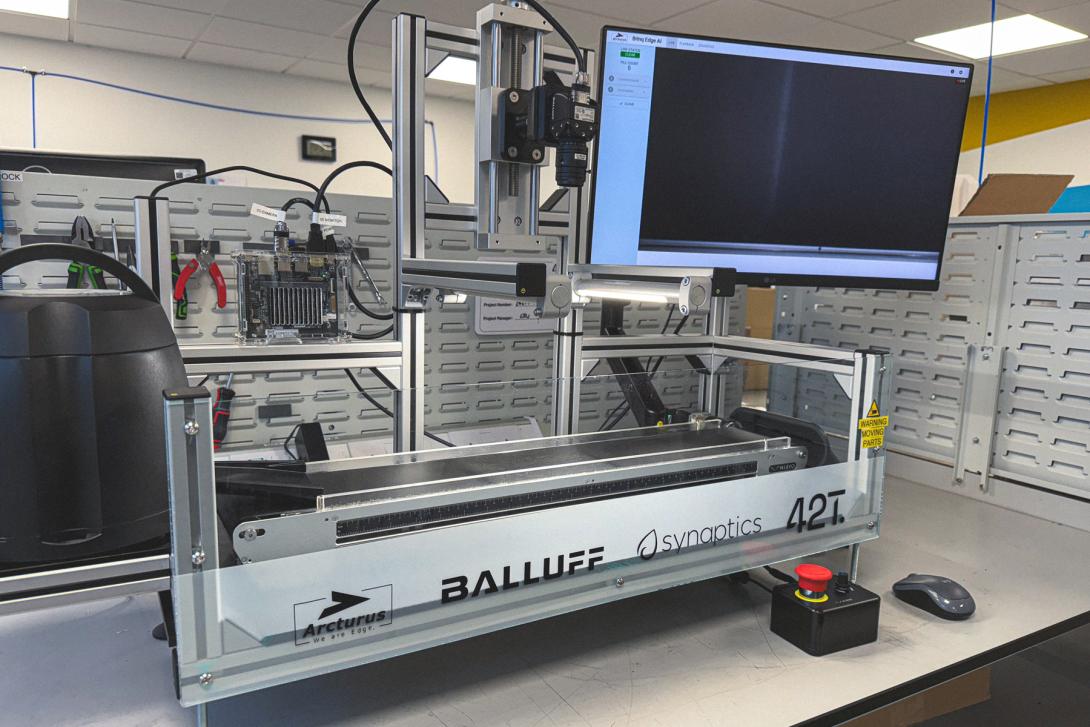
Line clearance tech demonstrator (Image: 42T)
IMVE: When dealing with new clients, how do you deal with expectation management in terms of what a vision system can (or can't) do?
JJ: In our experience, managing these expectations is all about establishing the requirements in a structured way early on, creating a set of defined specifications that consider the actual deployment of the system in the application.
Although it can be tempting to do some quick experimentation and prototyping of vision systems, unless you have properly understood the processes the system will monitor and the challenges it needs to overcome, it can often lead to the need to be re-engineered down the line, or in the worst cases, having an end system design that doesn’t achieve the users’ expectations.
This is particularly true with AI integration where the deployment is used to automate a process. Without fully understanding the role operators play in performing manual tasks – visual inspection, for example – implementing an automated solution can fall short of the full range of tasks performed manually, and leave operators still requiring manual inputs they sought to remove.
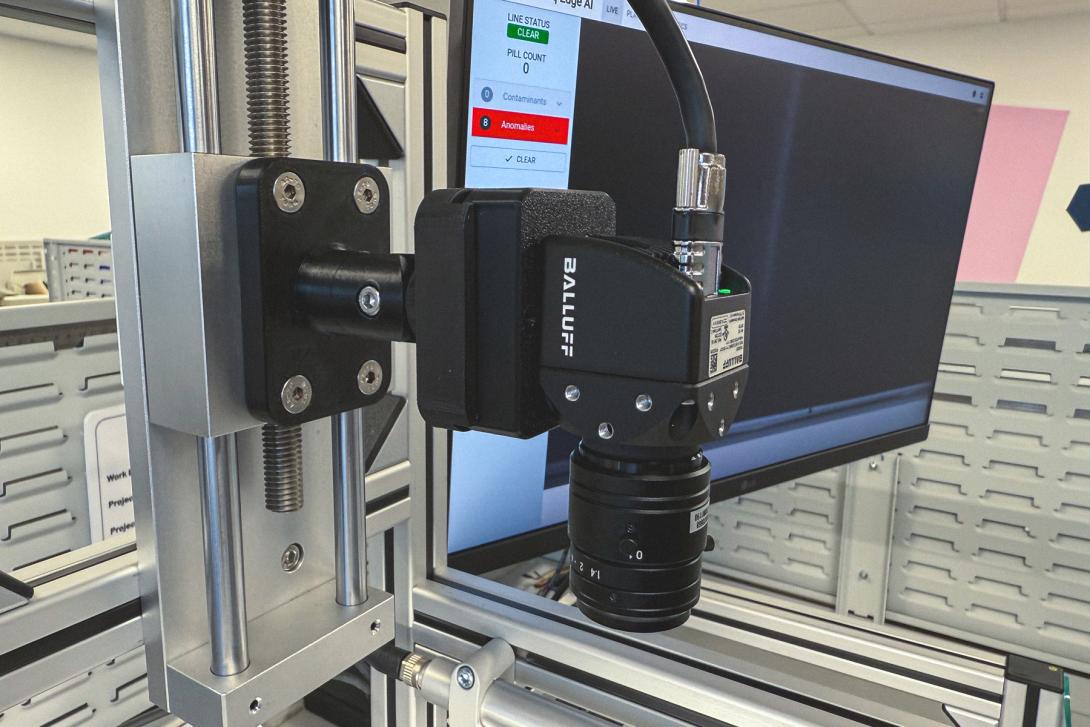
Balluff’s image acquisition system for line clearance (Image: 42T)
IMVE: What are your pain points when sourcing vision components and designing systems?
JJ: Common challenges in system design often centre around the interconnectivity of commercially available hardware and the restrictive development environments of data processing solutions, particularly in industrial applications.
Whilst many OEMs provide a wide range of industrial comms, the complexity and associated costs of integrating bespoke solutions into existing PLC/DCS systems can often make scaling these solutions to multiple monitoring locations or across multiple manufacturing plants challenging.
Equally, some of the AI driven solutions, either integrated into existing image acquisition systems or available as edge compute solutions, force users into restrictive development environments, locking them into system architecture with a limited development environment and relatively high costs of ownership, which can be a barrier to adoption.
Whilst this can be attractive for ease of configuration and use, the requirement in many cases is to transfer live streamed data directly into PLC systems or a standalone IT infrastructure for processing, which puts a further strain on the operator’s internal data management solutions.
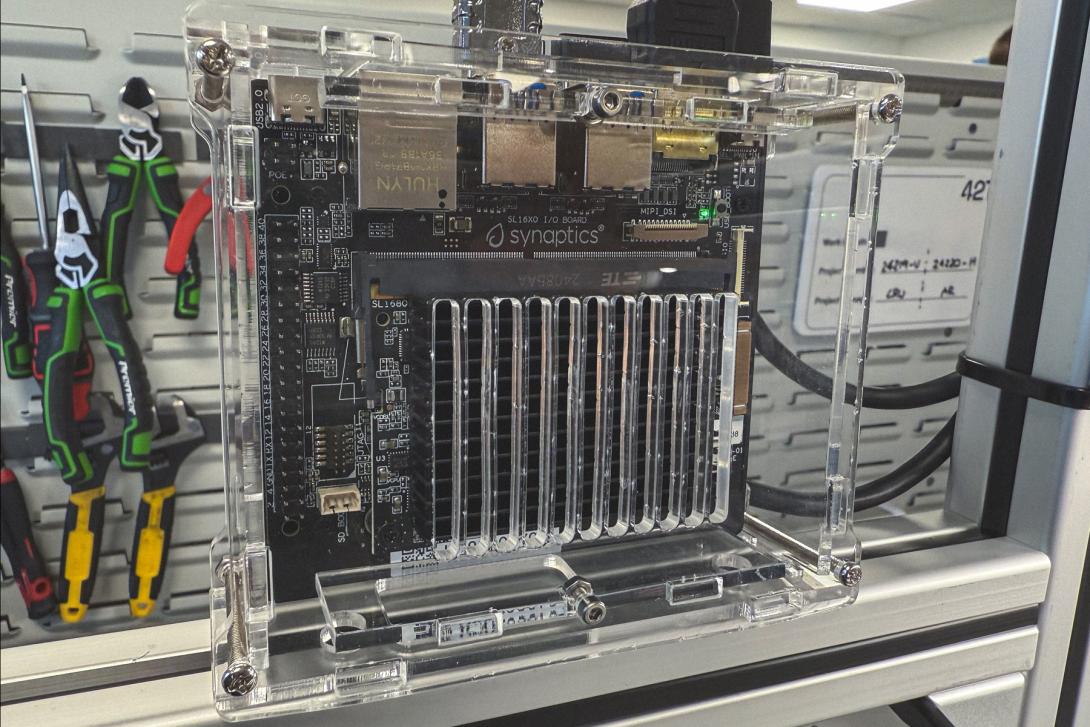
Synaptics’ Astra SL1680 edge AI processor (Image: 42T)
IMVE: What types of optical components do you buy?
JJ: At 42T we typically work on complex technical challenges that require bespoke solutions. As such we are able to individually consider the right approach for each project. This could include anything from designing and developing our own optical components right through to working collaboratively with existing vendors of complete image acquisition systems, and everything in between.
IMVE: What represents the biggest challenge in growing your vision-related business over the next 12 months?
JJ: The biggest challenge to growth is bridging the gap between the desire for AI-driven imaging solutions and the commercial viability of deploying them. Whilst there is an undisputed desire for greater automation in manufacturing, driven by AI vision-related technology, the relative geopolitical uncertainties make investment decisions challenging for industry.
Solutions that are easier to deploy than traditional large scale automation projects, and that show a return on investment more rapidly, will be attractive to industry. We see the potential for greater collaboration between companies like 42T and operators, OEMs, machine builders and AI device vendors as a way to achieve these more rapid and commercially viable solutions.
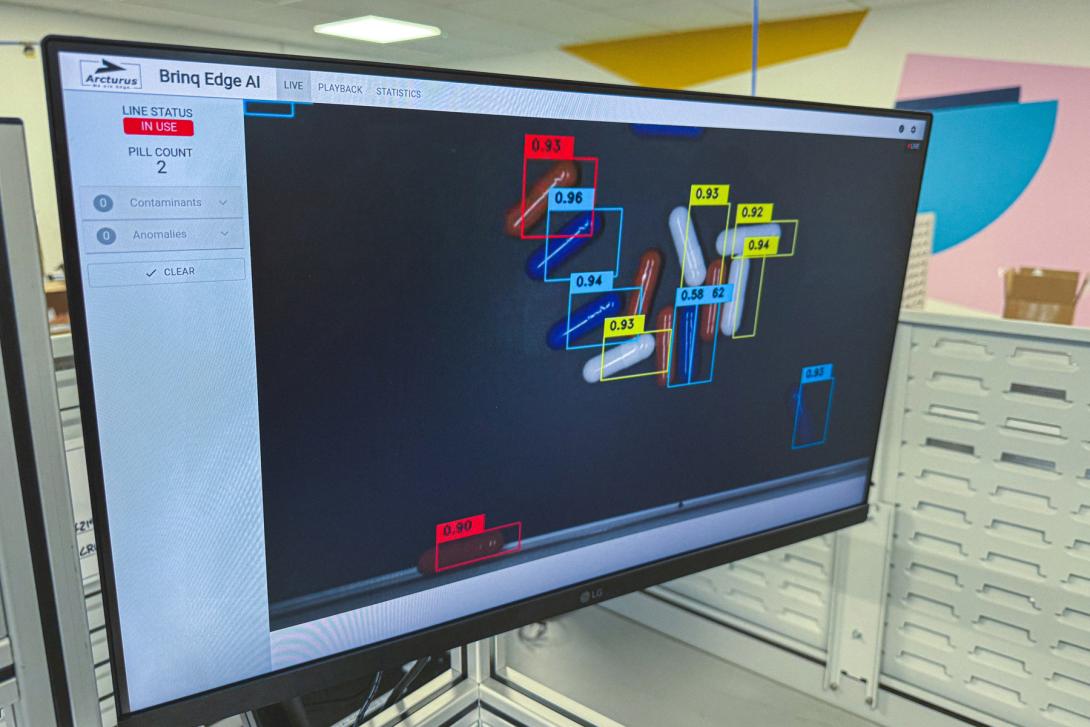
Monitoring of sample products with line clearance (Image: 42T)
IMVE: In terms of how vendors can support you, what represents good customer service?
JJ: Vendors can support our needs, and the needs of our clients, by providing open platforms for rapid development. Along with the core requirements of responsiveness and high-quality technical support, the values we look for in vendors are less restrictive development environments to integrate their equipment.
IMVE: Where else could vendors improve?
JJ: A more open approach to pricing and subscription models for the products and services provided would help users understand the true cost of ownership.
IMVE: Where do you find business opportunities?
JJ: We work with clients across the long-term, so provide support to a group of core clients across a wide range of science and engineering projects. We attract new clients by being actively engaged in these cross-industry challenges and defining ways in which we can help solve them. We also exhibit and attend events, publish articles and case studies and often receive referrals from current or former clients.
IMVE: How do you differentiate yourselves from your competitors?
JJ: With our experience in both solving complex challenges in industrial processes and developing new products for use within these industrial applications, we provide an insight to both process operators and OEMs that our clients find highly valuable. Our ability to understand the processes we are supporting with sensing and instrumentation solutions is a combination that sets us apart from many of our competitors.
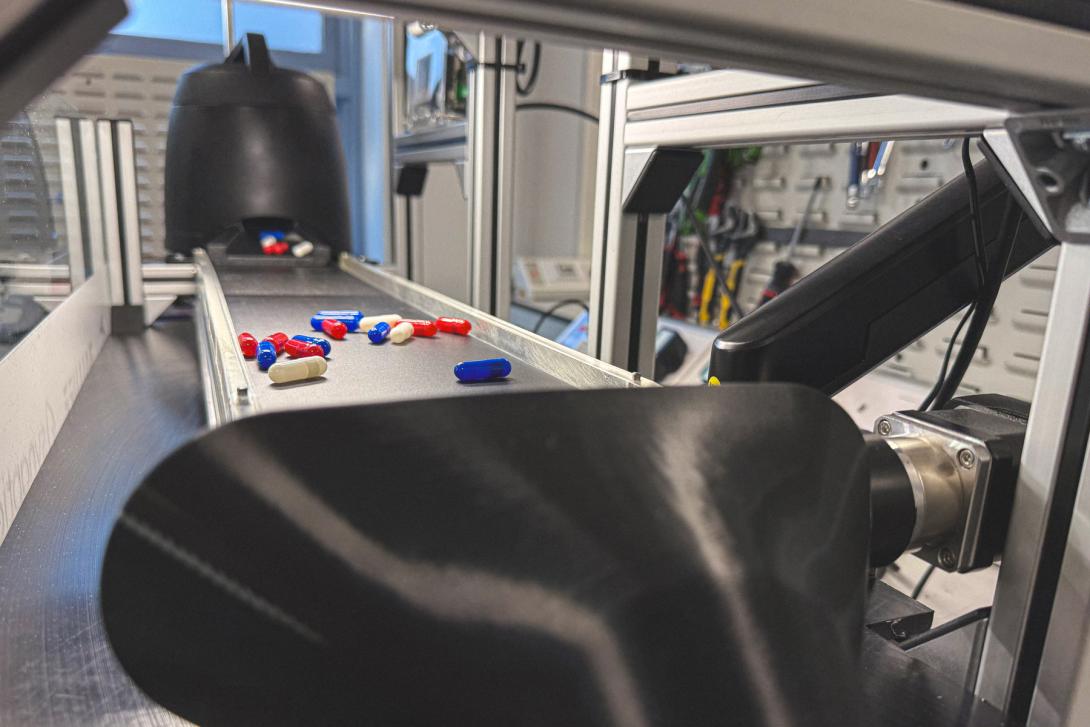
The line clearance tech demonstrator unit (Image: 42T)
IMVE: Which sectors are showing the most growth in machine vision, and why do you think this is?
JJ: We see significant growth across all the sectors we work in including industrial, MedTech and consumer. The drive for AI based solutions to improve automation, process efficiency and quality control, in manufacturing in particular, requires data captured from sensing solutions such as machine vision. As OEMs and operators further explore real-world applications for IoT within their processes and/or products, the demand for commercially viable machine vision systems will continue to grow.
IMVE: What do you think the next 12-24 months will hold for machine vision?
JJ: We see the emergence of more cost effective and scalable edge computing solutions powering native AI solutions embedded close-to-the-sensor as a catalyst for further evolution of machine vision, addressing the current cyber security and data management barriers that prevent adoption in certain industries that use cloud-only solutions.
The advantages of lower power consumption, reduced latency and increased compute power for edge devices, coupled with advances in machine learning capabilities, will increase the demand for automation, further driving partnerships and collaborations with OEMs looking for complete scalable, and commercially viable, solutions.
IMVE: Are there any events you plan to attend or exhibit at over the next 12 months? How important is even attendance/exhibition to your business?
JJ: We will be exhibiting at GITEX Europe in Berlin in mid-May with further exhibitions planned for later in the year. We find exhibiting and attending events is an important part of our business as we continue to engage in person with a wide range of industry leaders, collaborative partners and other innovators to provide cutting edge solutions.