AI vision: Rule-based vs deep learning inspection
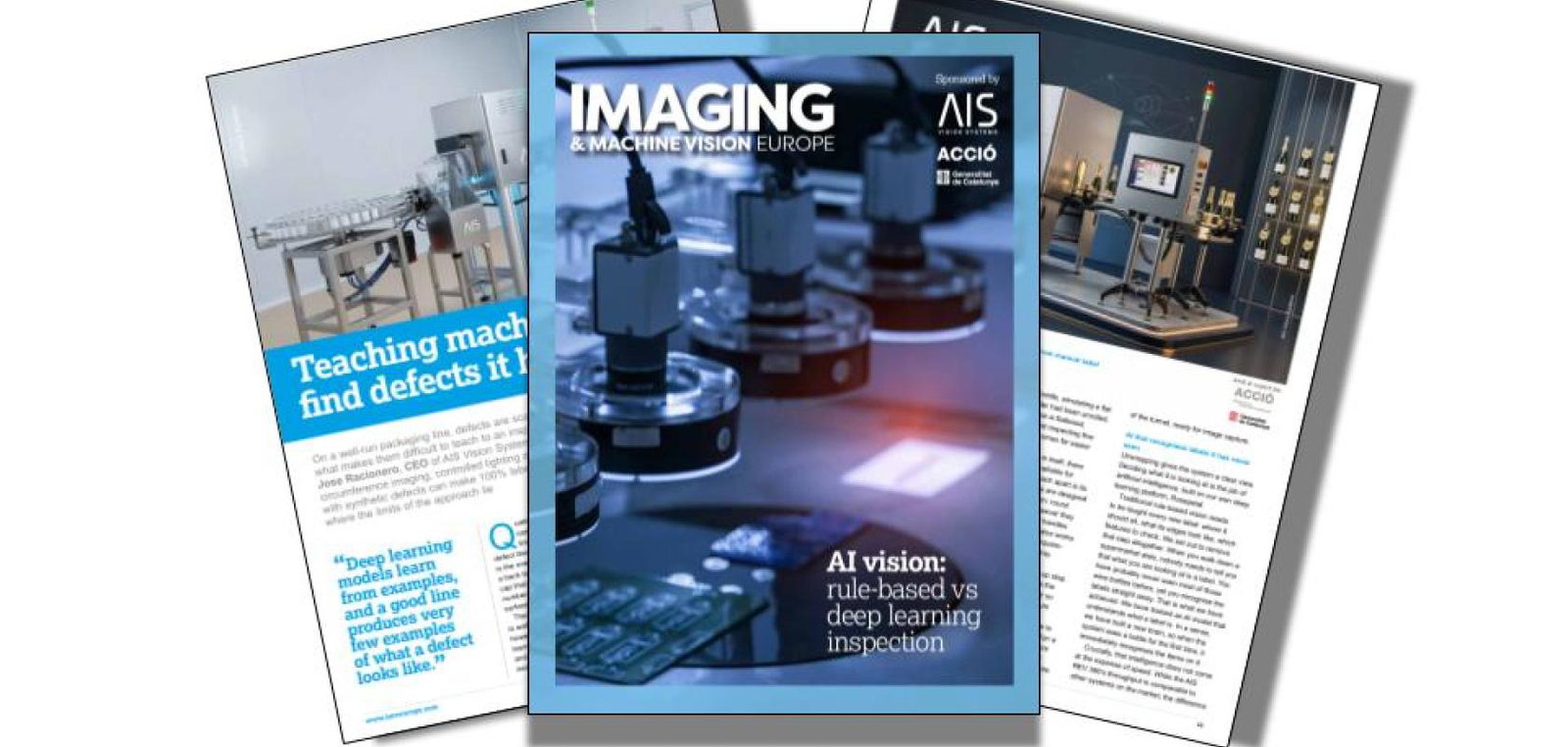
Practical AI vision from the factory floor to wider industrial workflows: A Technology Spotlight sponsored by AIS Vision Systems
For years, rule-based machine vision has excelled at inspecting uniform, predictable parts in controlled conditions. Yet it struggles when natural product variation, reflective or curved packaging, or shifting environments come into play. Deep learning promises to bridge those gaps, but brings its own hurdle: on a well-run line, defects are rare, and AI models need examples to learn.
Produced in partnership with AIS Vision Systems, this Technology Spotlight brings together insights from AIS Vision Systems, Zebra Technologies, and Hekner Systems, including a case study from a leading Spanish cava producer.
Who should read this Technology Spotlight?
- Production, quality, and engineering managers in food, beverage, pharmaceutical, and packaging manufacturing.
- Machine vision integrators and automation specialists comparing rule-based and deep learning architectures.
- Operations and technology leaders exploring AI vision beyond the factory floor in logistics, real estate, and infrastructure.
What you will learn
- Finding rare defects: Using full-circumference imaging, uniform LED illumination, and synthetic defect training for 100% inline label inspection when real faults are scarce.
- Recipes from a single sample: Generating inspection recipes automatically from a "golden" container or label artwork, and knowing where engineering judgement remains vital.
- Validation that builds trust: Why on-site acceptance criteria (such as 100% defect detection with under 1% false rejects) matter more than headline accuracy figures.
- Operator-friendly inspection: How a leading Spanish cava producer deployed four AIS systems for full quality control and let line operators handle routine format changes.
- Cutting through the buzzwords: Where rule-based automation, data analytics, and adaptive deep learning each fit best.
- Beyond the factory gate: Turning existing camera networks into automated workflows across logistics yards, real estate, and infrastructure.
Why download it?
As zero-defect targets grow and traceability rules tighten, sampling is giving way to 100% inline inspection. The main bottleneck is no longer camera hardware, but the time and expertise needed to separate acceptable variation from genuine defects.
This Technology Spotlight gives you practical guidance, real-world examples, and key questions to help plan your next deployment with confidence.