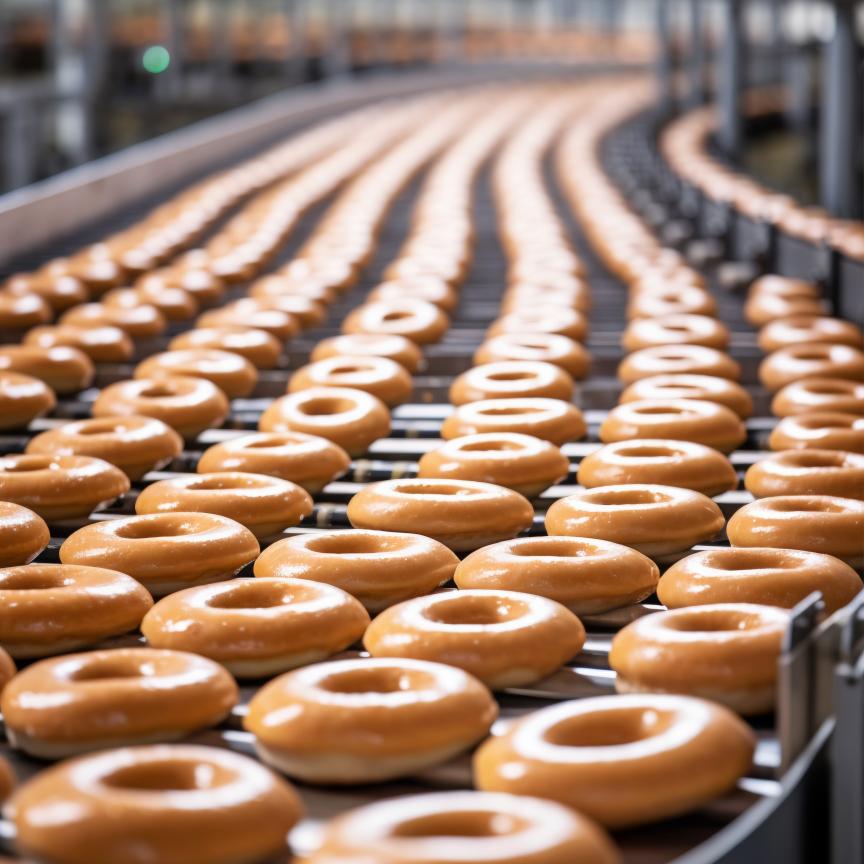

Alexandre Cottereau, Head of Product & Marketing at Effilux, speaks to Imaging and Machine Vision Europe about the company's remarkable growth journey, the critical role of lighting in machine vision, and why building long-term customer relationships matters more than specifications alone
Effilux: Company origins and rapid growth
Can you tell us about Effilux's origins? How did three engineering students turn their graduation project into a 70-person company?
Effilux started with three young engineers who graduated from the Institut d’Optique Graduate School in France. They had a simple idea: that optics and lenses combined with LEDs would revolutionise machine vision systems making them more flexible and adjustable on the field.
At the very beginning, nobody believed in them as it was the 2008 crisis and the chances of success for a startup company made by three young engineers with no experience were very low. To slowly gain trust on the market they had to answer to very specific needs that no other competitors would be able to manage. This is why making custom and specific products is still today one of the core values of Effilux.
Once the company reputation started to grow, they identified a first standard product to build that could answer most of machine vision needs: the EFFI-FLEX, a modular lighting system with many adaptations. Based on this, they won several awards, such as Machine Vision Product of the Year. At the same time, they kept developing custom projects with large OEMs. They were able to develop both sides simultaneously, and it's really the case today.
The growth has been remarkable, particularly from 45 to 70 people in just two years. What's driving this accelerated growth?
Our accelerated growth is primarily driven by our long-term investment strategy. Despite a slower market recovery in Europe and North America, our DNA involves heavily supporting deep tech companies and startups.
We 'plant seeds' in these smaller companies, and when they succeed, even if it’s only 10% of the time, it creates a significant, successful product pipeline for us. For example, we've been working with the space industry in France for several years and are now about to release one of our biggest specific products of all time.
This is despite the market not doing quite so well - the recovery from COVID has taken a long time.
How has the 2018 acquisition by CCS Group impacted Effilux's development?
This acquisition is beneficial for both sides. On the CCS side, they acquired a very healthy company with strong growth potential. Effilux has also a strong potential in terms of interactions with already existing companies of the group. The recent opening of the LightLab in Munich in September is a perfect example of all the efforts everyone is putting together to make it work.
On the Effilux side, it opened a lot of doors that we couldn't access as a small startup alone. Sometimes we were too small as a supplier, it was not a matter of trust in our products, but more about financial guarantees and other criterias important for larger customers . The other upside is having someone on site in different geographies. We had CCS America taking care of customers there, and working with them has helped us build the right products for the US market.
Machine vision lighting: market education and positioning
Machine vision lighting is sometimes called the unsung hero of automation. Why is proper lighting so critical?
First, people are biased with their own eyes. It's easy to understand that you need accurate resolution to catch all the details, but what's harder is understanding that your camera is basically strobing, or blinking all the time and its exposure time is very short, meaning it doesn't have much light coming in. Imagine you have your eyes closed most of the time and you're just quickly opening them. That's basically what's happening with the camera.
Then you have the notion of optical stability. Imagine you're Amazon on a production line with thousands of parcels per hour. Every time you're choosing between discarding or keeping a parcel, that costs you money, and this decision is all based on what you record with your camera. From one picture to another, if your light makes it impossible to detect whether it's a parcel defect or just a light bug, it's going to be very costly.
What are the biggest misconceptions you encounter about machine vision lighting requirements?
We still see customers asking for specifications of intensity in terms of lux or lumens. That's what they learn at school, but 90% of the time if you do so, you're going to make mistakes and have a bad surprise on site. It's very theoretical.
When you arrive on site, you have a lot of things to take into account. You're going to have ambient light, contrast issues, so maybe red light would work better than white light.
You're going to have foils around your parcel, so there are going to be glares that you have to eliminate with polarizers. There are too many things to take into consideration, even for us, to make it work based on theoretical models. I would recommend just getting some loans from us and trying them on site. It's very experimental, actually. We always recommend an on-site, iterative approach rather than relying on theoretical specifications alone.
Some people also think that light is the last thing you have to add to your machine system. Sometimes there's not much space remaining for our lights or you don't have the right angle. I would recommend thinking about lighting, cameras and all the systems before starting to design it.

Machine vision lighting: technical differentiation
What sets Effilux apart from competitors in terms of product development approach?
We're one of the only companies doing lights for machine vision that have three different levels of customisation: standard, custom, and specific.
Standard is basically products you have on the shelf, and it's what we sell most of the time. It's enough to fulfil maybe 80% of needs. Then you have needs for small adjustments on the standard products, like mechanical or electrical specifications. That's a custom.
Specifically, when we need to start from scratch because nothing is really working. This helps us cover the whole panel of needs in machine vision.
Second, we have a very large R&D department. A third of all our colleagues are in R&D. We even have doctoral students working at Effilux. We invest around 20% of our turnover in R&D.
We're also emphasising our production capacities. We have our own component assembly line. Thus, we're able to do a lot of electronic designs ourselves with quick iterations, making sure it's not only made in France, but on another level of quality.
Can you give an example of how you've solved a specific customer challenge?
We had an automotive production line that had 64 cars to inspect per hour. They wanted to automate inspections of gaps and flushness on doors, and they were not able to find any supplier for their lights because they had to project a geometrical form on the door to make 3D inspections with very high accuracy.
We custom developed it for them. This created one of our main success stories. This product became one of our standard products known as the EFFI-SHARP. The whole story is that it answered a very specific need that nobody would answer, and it became a bestseller for us.
You mentioned flexibility as a core strength. How does this translate into practical benefits?
We were the first to introduce this notion of flexibility to the market. The idea is to be able to buy a hundred times the same reference but each time adapt the configuration to better answer the specifications of your application.
Basically, you just open one of the caps and slide in and slide out the different lenses or accessories. By doing this you're going to change the angle of the light or many other light characteristics. You can add accessories like polarisers, line scans, cylindrical lenses, and you completely change the beam shape. You can buy large volumes of the same product but with very different variants that make it possible to answer different needs.
Logistics, food and beverage market focus
Logistics and food and beverage have been at the centre of product development at Effilux this year. What makes those industries particularly interesting?
It all started a few years ago for the logistics market. We started working with very large companies in logistics with very specific use cases: barcode reading through either scan gates or conveyors, and parcel dimensioning needs.
This led us to develop the EFFI-FLEX-LG, LG standing for logistics. This is different from what we've been using before because we have to reach very high frequencies and very powerful lights, all in a very cost-effective package. In this industry you have a lot of vision cells and they don't have much money to invest in each of them. You need built-in solutions to do parcel and barcode reading and general inspections.
Looking at the food and beverage industry specifically, are there any unique challenges?
It's a very tough market. The world population increases, and at the same time we're also very concerned with the quality of food. You have to deal with more production and more efficiency at the same time, more quality. Machine vision can bring something interesting there.
But it's very hard to work with this industry because everything must be very clean and very robust. Everything should be washable with very high-pressure water and detergents. It's pretty tough to work on. We have been contacted by some very large logistics players. They wanted to control barcodes at high speed on conveyors. Our products were good but didn't quite have enough power for the exposition time of the cameras that were really short. So, the eyes were opening and closing really fast.
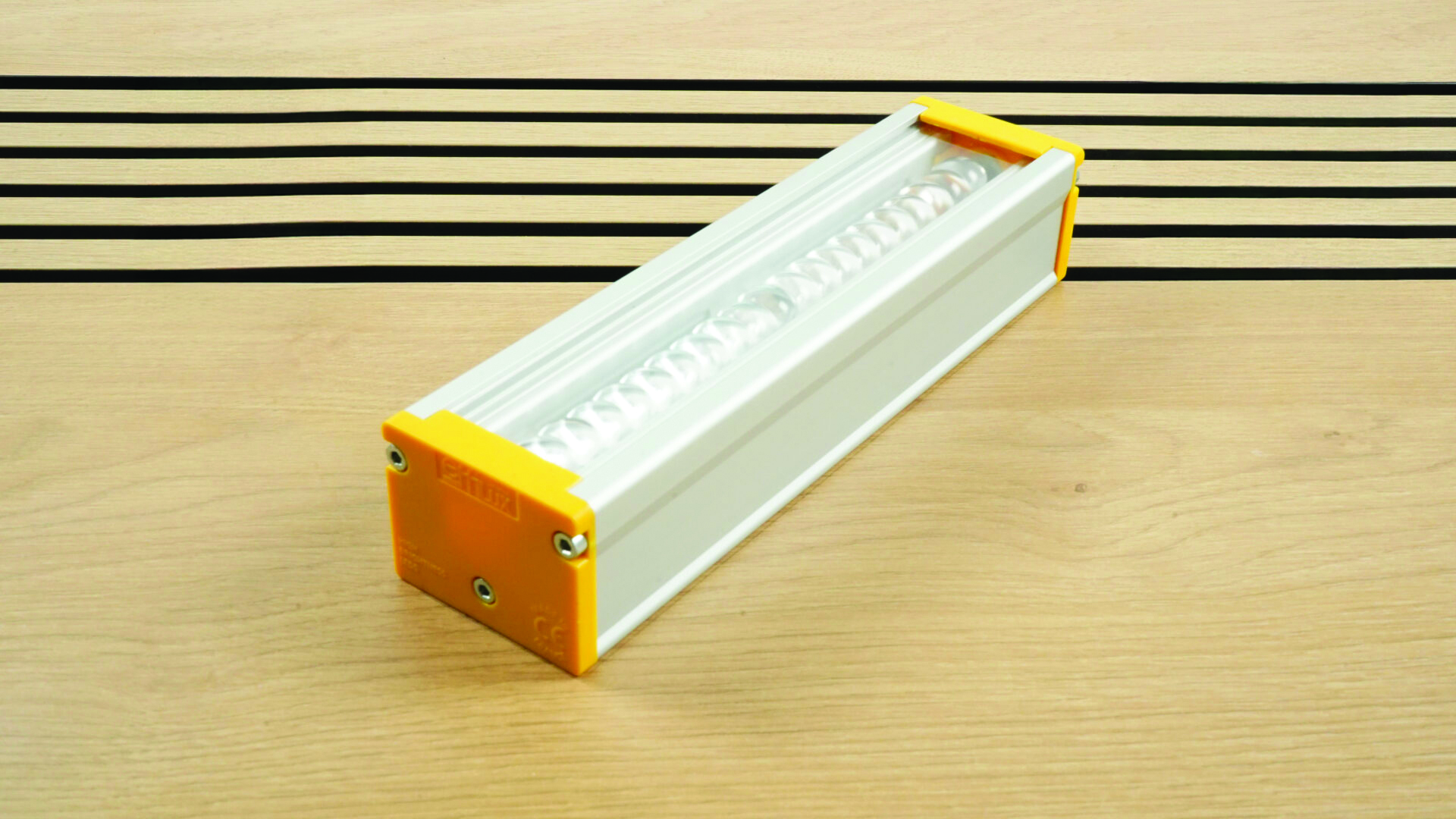
To capture enough light we had to increase the light output power, and at the same time, in this market, cost effectiveness is very important. This is because they have a thousand inspection systems to equip. We really developed the EFFI-FLEX-LG (pictured, above) with the notion of being cost effective but very high in terms of power. This worked well, and this year we want to emphasise this market and to renew our product portfolio. So, we're happy to announce that in a few months we will be releasing new products that will help us cover more needs in this market, particularly when it comes to mobility and inspection on the move.
Future outlook: Machine vision lighting trends
What trends are you seeing in machine vision that will shape lighting requirements over the next few years?
There may be new parts of the spectrum that will be explored in the coming years. We see that infrared is interesting because we have a lot of use cases around these wavelengths. We have some historical limitations in SWIR (Short Wave InfraRed) technologies, but we think we'll be working a lot on this because interest is rising there.
Industry 4.0 is something we've been hearing about for maybe ten years. I think it's really starting in Asia because they're buying more and more robots. I think this trend may come to Europe. Being able to have your products incorporated in this whole connected network will be important.
Finally, more specific to warehouses and logistics, the rise of robotic guidance, AGVs, 3D inspection and capacity to move inside the warehouses autonomously will bring something else. Things will go faster. We need to always have higher frequencies, higher powers.
Where do you see Effilux in the next three to five years?
We want to be, and we're already starting to be, a very big company in the logistics market, in food and beverage and in linear inspections. We want to keep pushing in this direction whilst maintaining very good quality of products in every machine vision area.
We want to keep customisation as a differentiator. It's part of our DNA. At the same time, it helps us be excited about what's happening in machine vision. Our engineers are really keen to be challenged to build new products.
We need to push on new geographical areas. North America is still very large. We still have space there. Also in the region, with the light lab in Munich, we have very good momentum.
Keep going with product innovation, so a lot of performance and modularity to develop, adaptability for Industry 4.0 challenges, and bring new talents to Effilux, because it's all about diversity. The more diverse you are, the more new ideas and innovation you bring.
Finally, what advice would you give to companies just starting to explore machine vision applications?
Don't go through this misconception that light is an easy thing. Lighting is most of the time underestimated. It's complicated to deal with contrast, different polarisation, different defects. I would recommend just trying things, asking advice from our experts, and testing everything you can on site.
You need to understand that specifications aren't everything on a product. I know it's always important to compare what is happening at Effilux or our competitors, but you have to keep in mind that you're not just investing for the next year. With us, you're going to stay in touch for maybe the next ten years. We will grow together and our goal is to make you succeed.
We have plenty of services that could help you along the way. We have a lot of customers that are staying with us for 10 years that become friends. We go to dinner with them. It's not only about work. Of course, it's about work, efficiency and quality, but it's also about relationships. You just need to have some fun with vision systems and have the experts to give you good advice.